
Back Industrial Runtime and Control Platform Time to launch Deploy screen packages directly Operational safety Access · alarms · event logs Lifecycle operation Health monitoring · multi-site
HQControl
Run finished industrial screens reliably on site. HQControl brings screen runtime, device connectivity, operational safety, alarm handling, and long-term maintenance into one system.
Deploy screen packages exported by Designer without rebuilding the frontend. Operators use the browser runtime while engineers manage devices, access, alarms, trends, and system health from the administration console.
Browser runtimeRole-based accessAlarms and traceabilityLifecycle operations
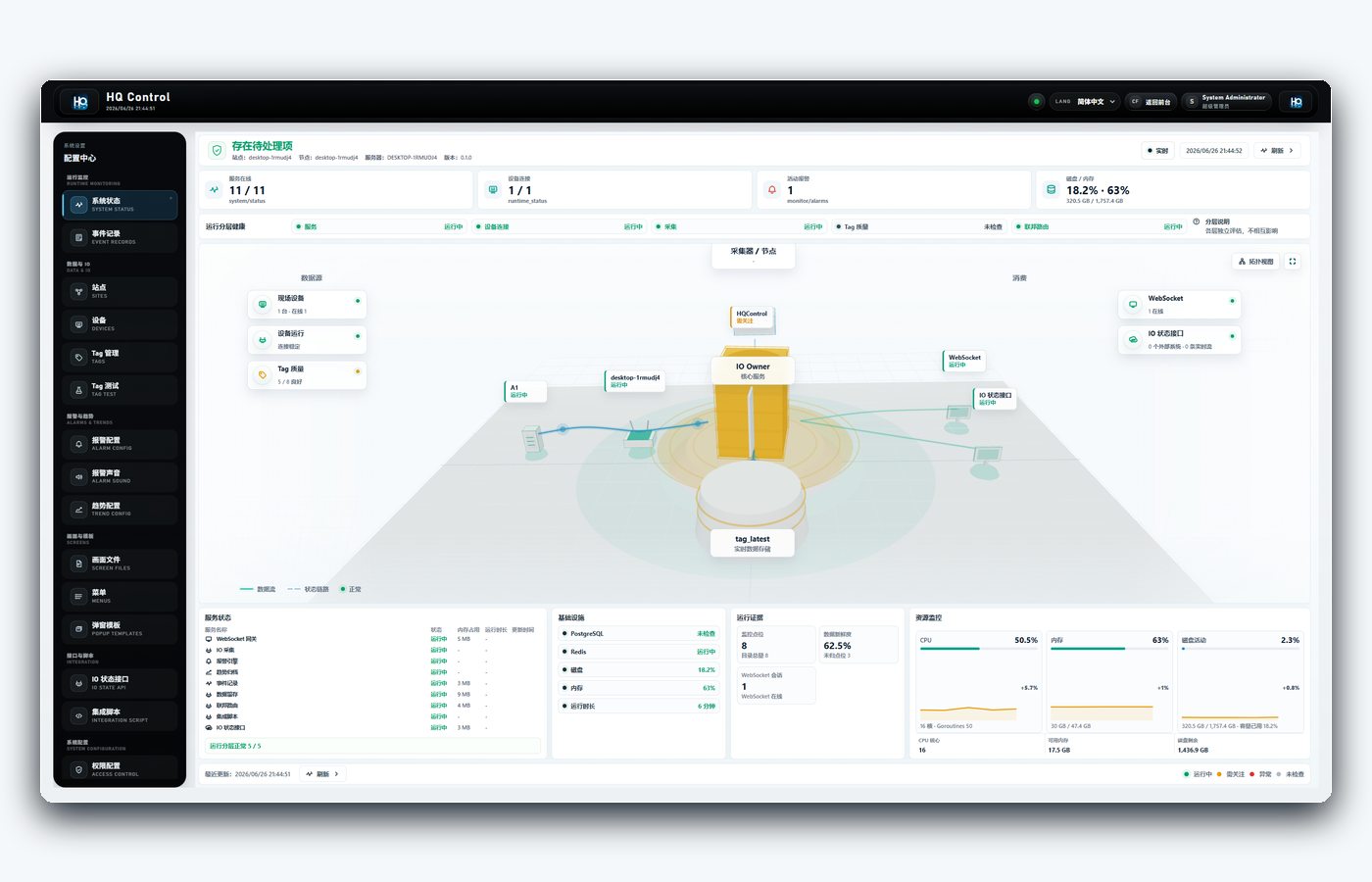
For projects that need to connect finished screens to devices, hand them to operators, and keep them running on site.
Deploy the package without rebuilding the frontend, then add permissions, alarms, trends, and operations.
Operation, configuration, traceability, and maintenance have clear entry points instead of relying on one engineer's memory.
Path
From screen package to site acceptance
Four steps establish a site runtime that is operable, traceable, and maintainable after handover.
Install HQControl on the site host or server and confirm system health.
Import the screen package, connect PLCs and protocols, and establish site tags.
Set role access, menus, alarms, trends, and approved write actions.
Verify alarms, events, and health; add project reports or multi-site capabilities only when needed.
Positioning
One system for every role on site
Operators focus on the current process, engineers configure and troubleshoot, and project owners need a system that remains maintainable after handover.
Open screens, alarms, and trends from one runtime instead of switching between separate tools.
Manage device connections, tags, permissions, and runtime health in one place when diagnosing site issues.
Deployment, licensing, event records, retention, and multi-site operations have clear ownership and entry points.
Capabilities
Runtime capabilities customers actually use
This page explains the customer value first. Open the user guide for device, access, and deployment configuration.
Load Designer screen packages with pages, menus, and popups in the browser without rebuilding a second frontend for deployment.
Check device connectivity, IO Worker, Owner, tag quality, and consumer state in sequence instead of guessing why a screen has no value.
Run controlled tag access, local computation, schedules, IO-change triggers, and managed HTTP or PostgreSQL operations.
Combine local inputs with number or boolean expressions, then validate, publish, enable, and diagnose an auditable read-only result.
Acknowledge and trace abnormal conditions, authorize critical actions by role, and retain field writes and configuration changes.
Review system health, resource usage, and service state centrally across Windows, Linux, server, and multi-site deployments.
Engineering capabilities
Go beyond displaying data: calculate, diagnose, and integrate
Start from the real HQControl interface and see how Python, IO analysis, calculated tags, and IO State API support site integration and diagnostics.
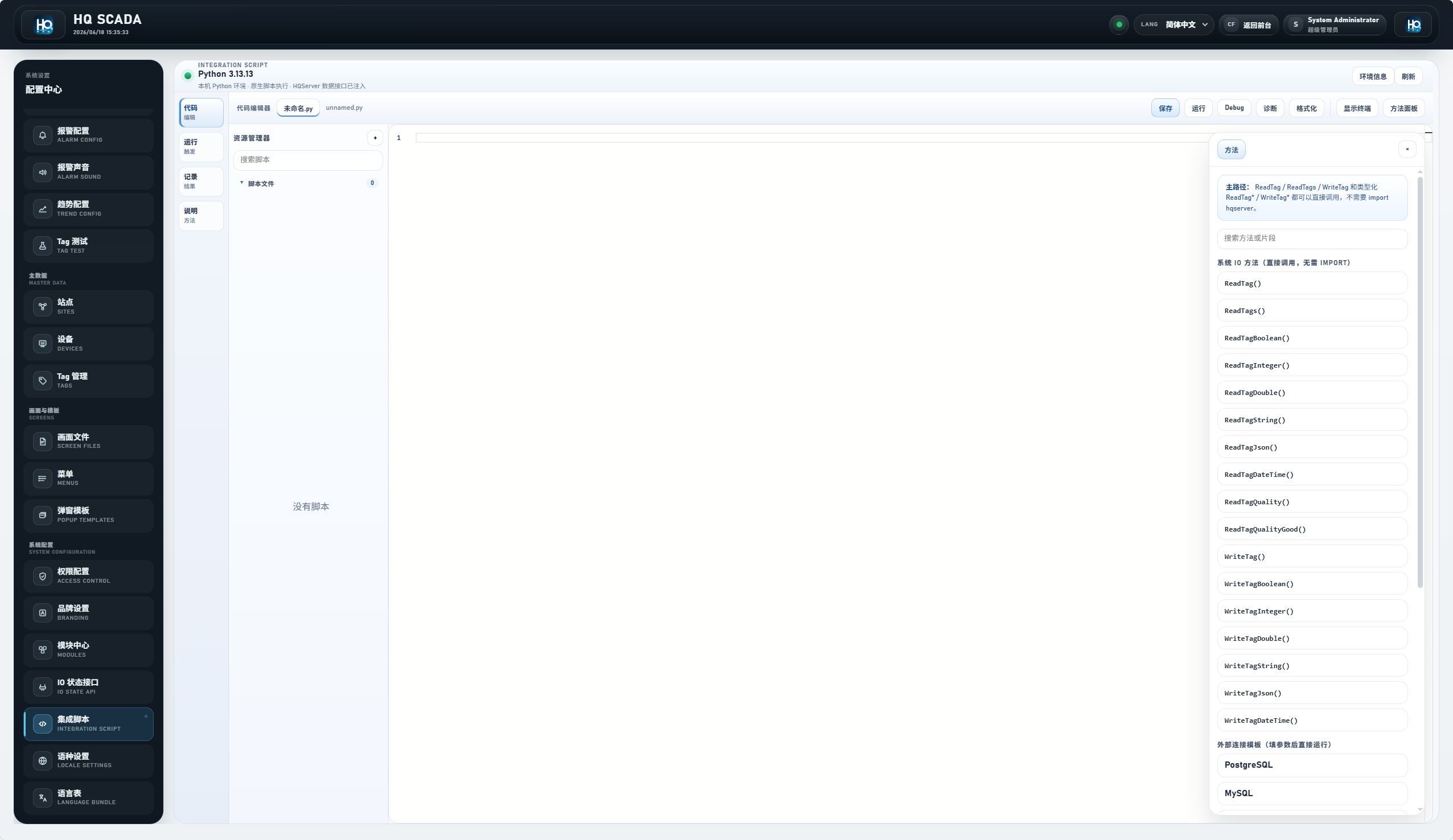
Use the Tag Bridge for authorized tag access and trigger scripts manually, on a schedule, through signed HTTP inbound, or from IO changes. Managed connectors handle external access.
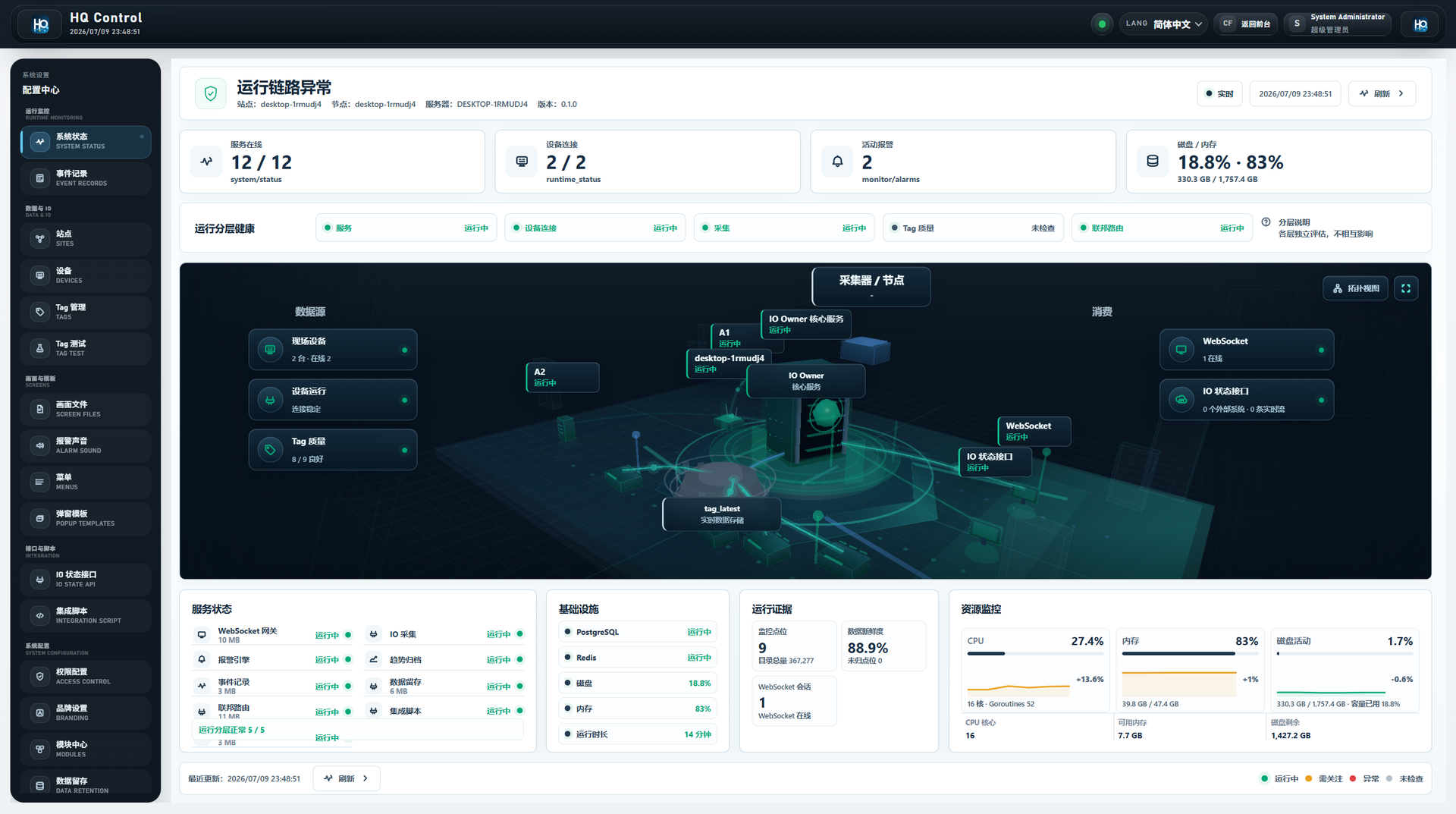
Check device connectivity, IO Worker, Owner, tag quality, and consumer state in order to separate chain failures, quality degradation, and consumer-side issues.
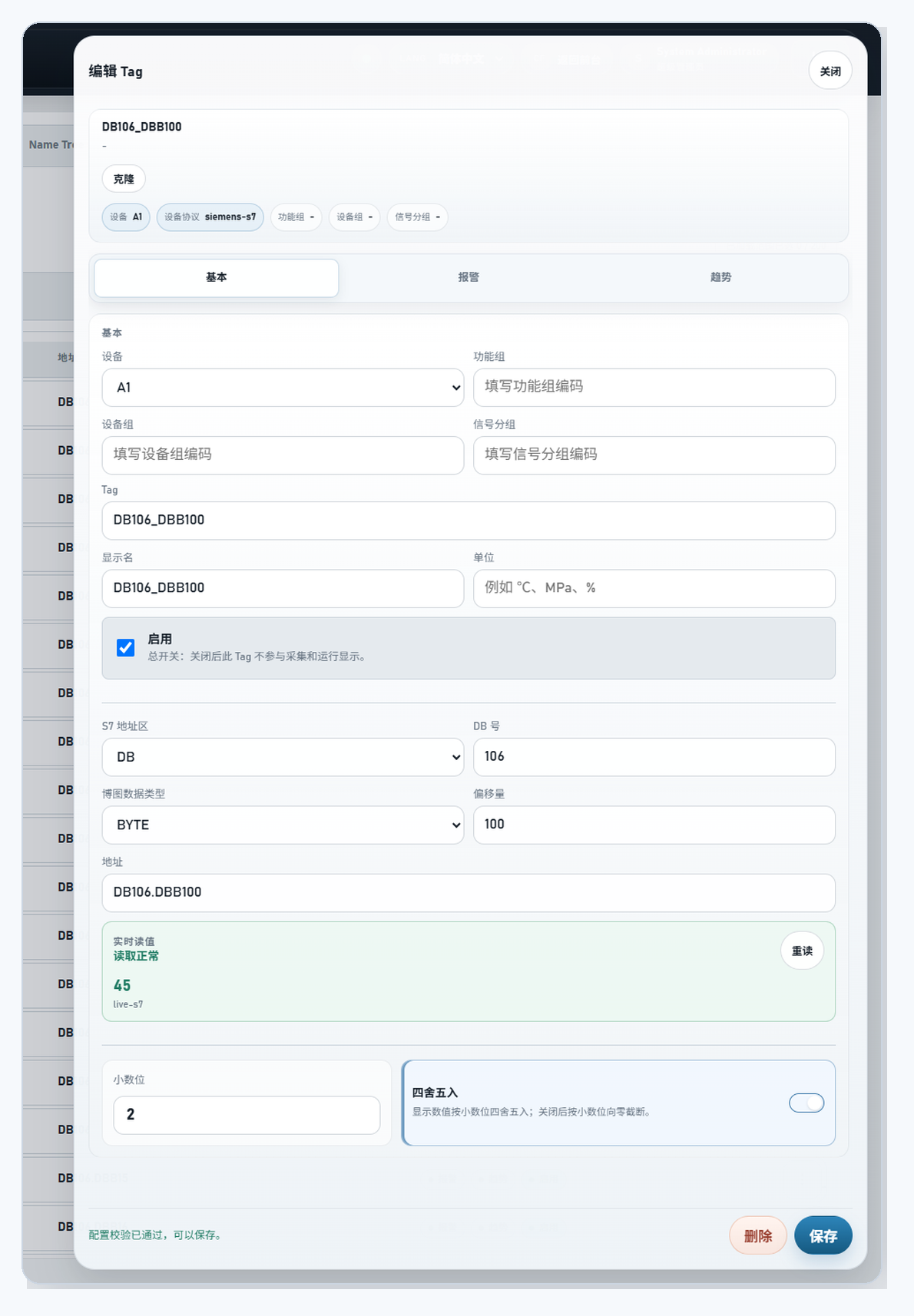
Combine local IO inputs with number or boolean expressions, validate and save the draft, publish an immutable generation, then enable it and inspect runtime quality.
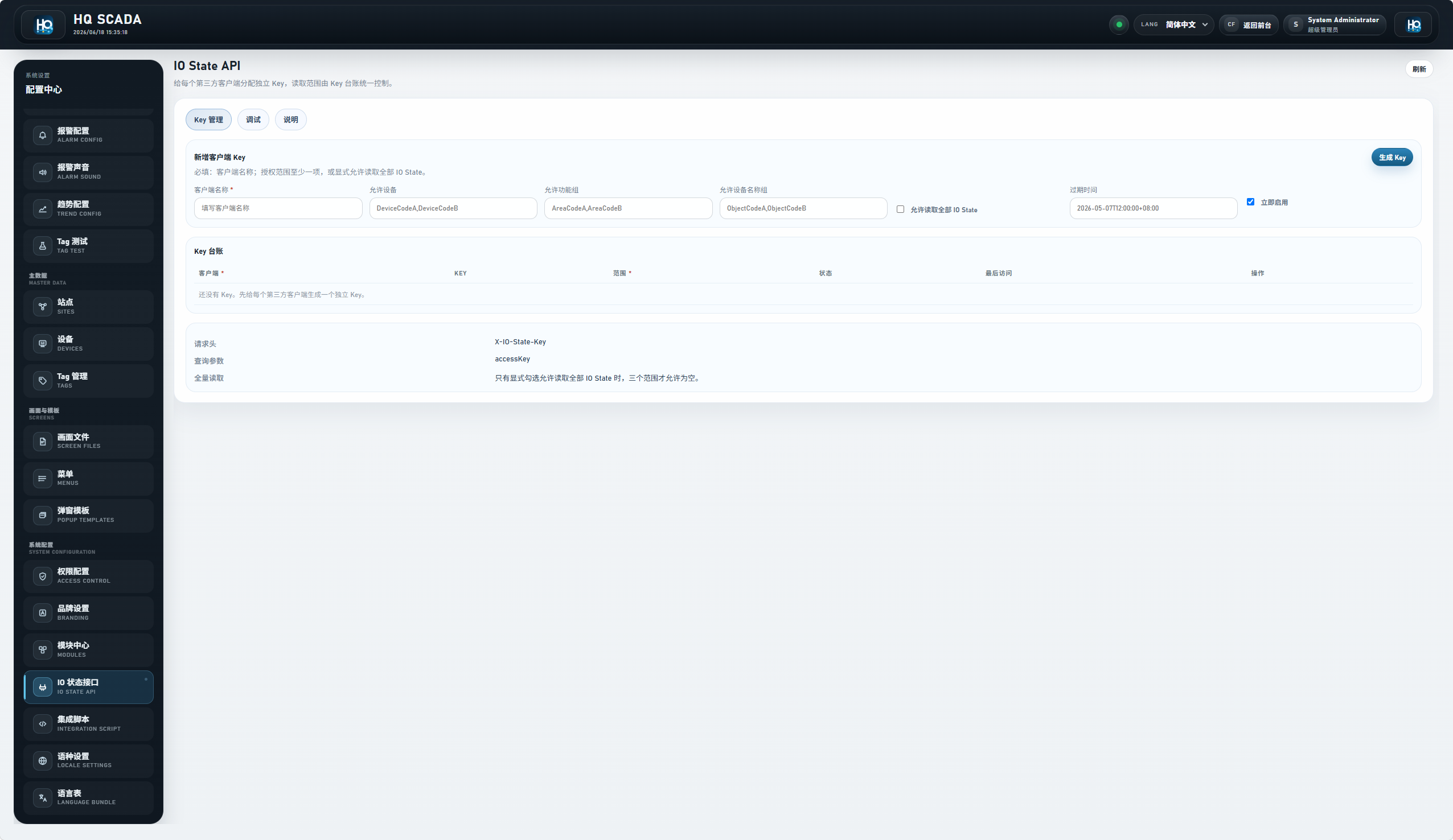
Assign each client its own key and minimum readable scope. Use HTTP for low-frequency queries and WebSocket for continuous state streams.
Optional extension
Use custom pages only when the project needs them
Shift reports, energy dashboards, and device diagnostics can be added as project pages. This remains an optional extension, not another workflow every project must learn.
Dedicated pages load separately so project report and dashboard code stays clearly separated from the main system.
Each page receives only the tags and actions explicitly approved for its project purpose.
Use live values, history, alarms, and table helpers to build a report, dashboard, or diagnostic view for the customer.
Support
Built for production delivery and lifecycle operation
HQControl covers more than screen playback: deployment, connectivity, traceability, extensions, and multi-site maintenance share one engineering foundation.
Deployment platforms
Deploy on Windows or Linux across local hosts, edge nodes, and servers according to site scale.
Device connectivity
Connect Siemens S7, OPC UA, Modbus TCP, and internal variables for common industrial site architectures.
Records and traceability
Retain alarm acknowledgements, trend changes, and operator events for shift handover, investigation, and acceptance.
Project-specific extensions
Use scripts, APIs, and custom pages only when a project needs external integration, reports, dashboards, or diagnostics.
Licensing and updates
Manage software licensing, updates, and later extensions through one maintenance structure that is easier to hand over.
Multi-site and resilience
Coordinate multi-site projects and use remote IO or redundancy takeover when the site architecture requires it.
Typical Use
Application scenarios
HQControl is for industrial visualization projects that need production deployment, long-term operation, and maintainable handover.
Production lines and equipment
Connect finished industrial screens to PLCs and site tags for daily monitoring, control, and abnormal-condition handling.
Control rooms and remote operations
Review alarms, trends, system health, and event records for continuous operation, diagnosis, and multi-site maintenance.
Projects that require integration
Use Python, calculated tags, IO State API, or custom pages when the project needs reports, databases, or third-party systems.
Next Step
Continue
Use this page to decide whether HQControl fits the project, then continue with deployment, runtime configuration, and extension guides.